
about
I’ll help you hear more of yourself.
I’ll listen closely, share what I notice, support and challenge you with care. We’ll keep checking what fits, and you won’t have to perform being okay.
01 Your curiosity leads.
02 Consent is checked, not assumed.
03 No part of you is the enemy.
WHAT’S IT’S LIKE TO WORK TOGETHER

You don’t need to arrive tidy, certain or “enough.”
There is room here for what has felt too vulnerable, complicated or embarrassing to say elsewhere. I’ll think alongside you, share what I notice and check whether it fits. I take what hurts seriously without making therapy unnecessarily heavy.
We’ll be led by your curiosity.
Your curiosity sets the direction, You’ll have choices along the way, and we’ll keep checking what feels right to you. I won’t tell you who you are or what you should want. I’ll help you hear more of yourself—and gently challenge you when fear, shame or an old protective pattern may be speaking for the whole of you.
No part of you is the enemy
When a part of you is creating difficulty, we’ll get curious about what it may be protecting or trying to accomplish—not begin by trying to get rid of it. We’ll also consider the histories and larger systems that taught you what to hide, judge or override in yourself.
Insight matters—but you may already understand a great deal about yourself. If it feels useful and accessible, we can notice how that understanding shows up in your body, creating room for new experiences rather than only more analysis.
Pain and pleasure can exist at the same time.
We can make room for pain while also laughing, celebrating change and cultivating pleasure and ease. Healing doesn’t have to be complete before thriving can begin.

HOW I FOUND MY WAY TO THIS WORK
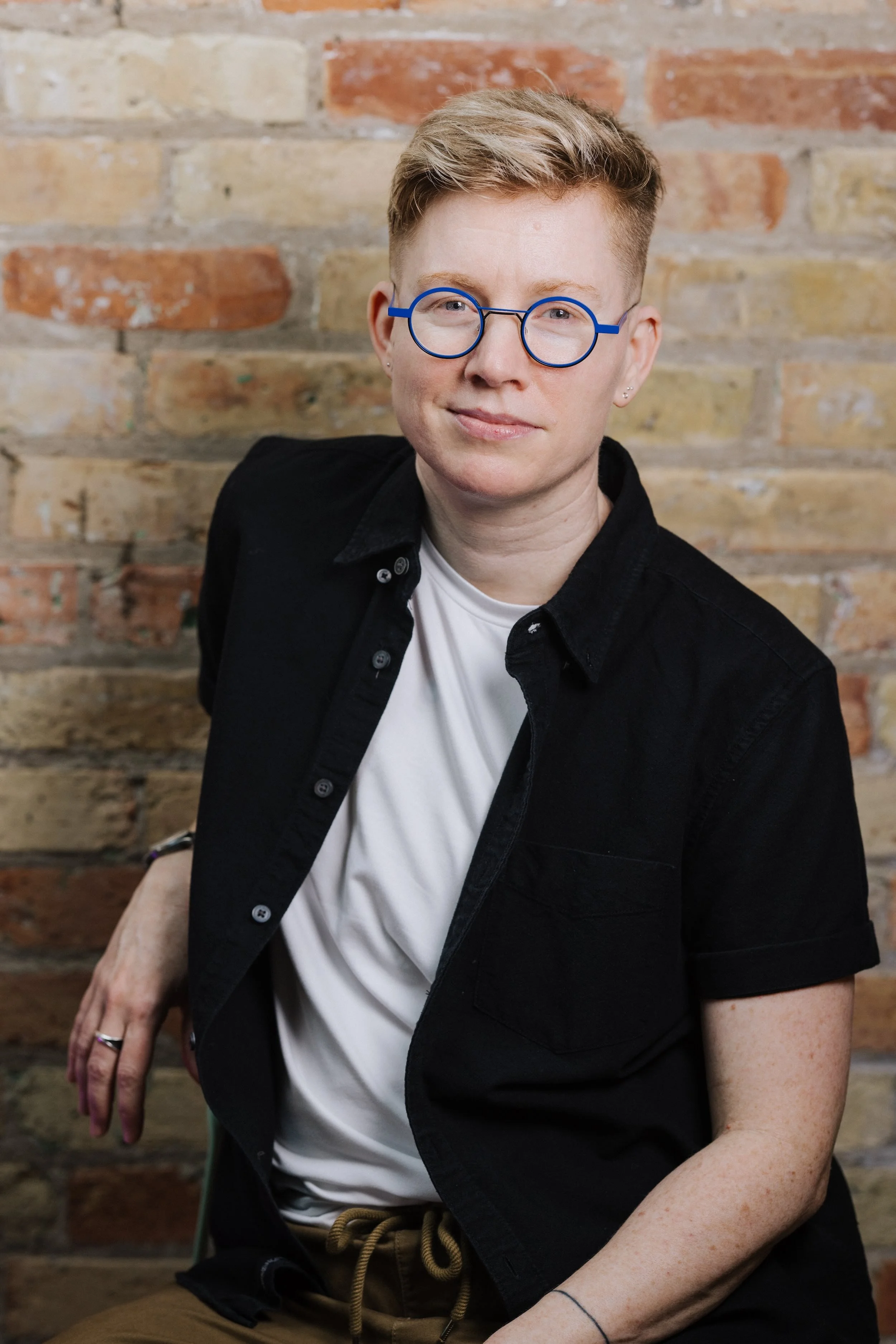
As a child, I spent long hours enchanted by the tiny creatures in the intertidal pools along the British Columbia coast. I made art from whatever was on hand—scraps of wood and leftover building supplies, cardboard boxes, anything I could paint on, draw on or glue together. I thought I would become an artist. And for a long while, I was.
So how did I become a therapist?
It began with my own therapy. I became as fascinated by it as I had once been by those intertidal creatures. With each step of my early training, I fell further in love with the mysteries and secret logic of how people become who they are—and how they change. Therapy felt like another kind of creative practice. Again and again, I got to enter the unknown with another person, each session alive and unfolding.
It was only years later, looking back, that I realized
I became the kind of therapist I once needed.
Like many of the people I now work with, my relationship with my body, gender and sexuality hasn’t been straightforward—or really, straight in any way. I was non-binary before I had language for what I was experiencing or a way to understand it. I knew I was queer, but had no idea what to do with that either. Trauma shaped the contours of my family of origin and, like many people assigned female at birth in the 1970s, my neurodivergence—including ADHD—went unrecognized until well into adulthood.
I spent much of my early adulthood building a life in which I could feel less alienated—more steady, supported and at home. I became a parent. I made a home. I found work I loved. These are beautiful things.
Then my body turned my world upside down for a while. When a chronic illness became more serious, I found myself facing the existential reality that our lives are limited.
Time became real in a new way, and I was no longer willing to leave so much of myself unlived.
Turning toward the fear, uncertainty and personal and relational complexity I had pushed to the edges was overwhelming. What changed was not that I stopped being afraid. I became more committed to being deeply honest and courageous about my own truths, desires and needs—and to creating joy, rest and moments of wonder in the here and now.
I followed glimmers of gender euphoria. I let go of inherited scripts about sexuality, along with a shitload of shame. I tried different relationship structures. Through improvisational movement, strength-building and a love of singing, I learned to listen to my body differently—as a source of knowledge, pleasure and possibility.
Seeing and loving the neurodiversity of people dear to me helped me recognize and value my own. That recognition loosened another layer of shame and made me curious about what a life built with—not against—my brain and nervous system might look like.
I learned that the life I want is made, in large part, by practising small things intentionally—which is a total pain in the ass at least as often as it is rewarding. Insight can happen in a moment, but the nervous system learns through repetition. The process is usually annoyingly slower than our minds would prefer—but those repetitions aren’t dead time before change. They are the change. Humour helps. So does seeing the cup as half full without pretending it isn’t also half empty.
Pleasure, I discovered, is an excellent doorway to self-discovery. Building safety and reducing pain matter; they are simply not the same as learning what brings us pleasure or making room for it.
Insight can happen in a moment, but the nervous system learns through repetition. The process is usually annoyingly slower than our minds would prefer—but those repetitions aren’t dead time before change. They are the change.
This is part of what I bring into the therapy room: respect for the ways we protect ourselves, patience for change at body speed and curiosity about what becomes possible when pleasure, wonder and desire are treated as sources of knowledge—not rewards we earn once the hard work is finished.
Thank you for reading my story. I hope you find a small moment of wonder in your day.
WHAT I HAVE COME TO BELIEVE
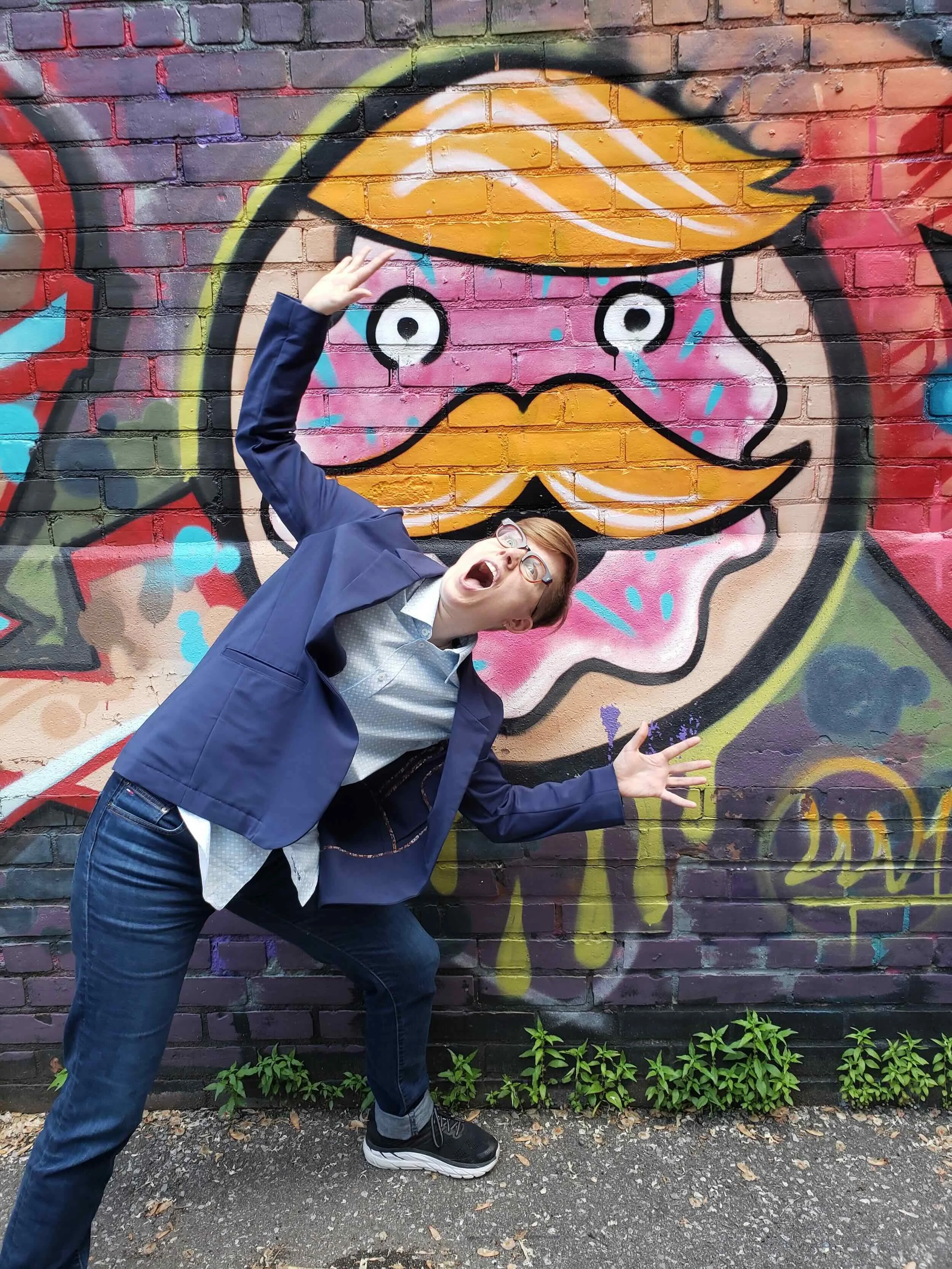
Pleasure has as much to teach us as pain.
Pain is very good at getting our attention. Pleasure can be harder to find—but it has things to tell us too.
It isn’t a prize for becoming healed enough, and it certainly isn’t another thing to pull off perfectly. It can be valuable information—showing you what connects you to yourself, where your curiosity leads and what helps you feel more alive and present.
Therapy can honour what helped you survive while making room to explore what you want more of—at your pace, on your terms. There’s no single version of thriving.
Discovering, creating and receiving pleasure can be serious work. A serious face is optional.
Read more about pleasure and pain in these articles:
Pleasure begins with attention →
Learning to survive our own aliveness →
WHAT INFORMS MY WORK
People are more complex than any one theory.
Sex, gender, bodies and relationships are complex. I don’t expect any one therapeutic model to offer the whole picture.
My training has developed in response to what clients bring into the room—and the gaps I find in my own understanding. I draw from these approaches flexibly, bringing the body into conversation with thoughts and emotions and adapting the work to the person in front of me. The aim is change that can be experienced, not only understood.
Explore the training I draw from below.
-
Ongoing professional learning
Clinical consultation, specialty courses & ASTO meetings | OngoingLearning does not end when a course does. I regularly participate in clinical consultation with a sex-therapy supervisor, take shorter courses on specialty topics and attend meetings of the Association of Sex Therapy in Ontario (ASTO). It keeps my thinking fresh, accountable and connected to what is changing in the field.
Professional Training in Somatic Sex Education: Core Courses 1 & 2
Institute for the Study of Somatic Sex Education | November 2022–June 2025; study ongoingBody-based training in consent, choice, somatic awareness and mindful erotic practice. It helps us listen for your own signals of pleasure, boundaries and possibility—not somebody else’s script for how sex should work.
Intensive Sex Therapy Training Program
University of Guelph | November 18–22, 2019An immersion in the many ways desire, shame, intimacy and sexual functioning are shaped by relationships and culture. It helps me stay curious about the whole story rather than treating a sexual concern as a broken part to fix.
Optimal Sexual Experiences Training
Peggy Kleinplatz | January–April 2021Training grounded in research on what people actually find deeply fulfilling in sex: presence, connection, authenticity, communication and exploration. It keeps the question on what makes sex meaningful for you—not whether you are doing it right.
Emotionally Integrated Voice Teacher Training
Fides Krucker | 2023–August 2025; independent study ongoingExperiential work with breath, sound and voice as pathways into expression and connection. It helps me make room for the places where words run out—and for more play, choice and aliveness.
Sexual Attitude Reassessment (SAR)
Den Temin | 2019An experiential exploration of the values, assumptions and cultural messages we carry about sexuality. It helped me notice more of what I bring into the room, leaving more space for your sexuality to be understood on its own terms.
-
Sensorimotor Psychotherapy Level I: Affect Dysregulation, Survival Defences and Traumatic Memory
Sensorimotor Psychotherapy Institute | May–December 2016Body-based trauma training focused on noticing activation, building resources and finding more choice without having to retell everything in detail. It is especially useful when your body seems to know something your thinking mind has not caught up with.
Sensorimotor Psychotherapy Level II: Emotional Processing, Meaning-Making and Attachment Repair
Sensorimotor Psychotherapy Institute | March 2017–April 2018Advanced work with emotion, attachment and meaning as they live in both body and mind. It helps us approach protective patterns with respect and create change you can actually feel, not only understand.
The Trauma of Money Professional Certification Program
Trauma of Money Institute | 2025–July 2026Sex and money have more in common than we might at first glance think - they both often connect to our sense of safety and self-worth, and can have a big impact on our attachment relationships. This training was in how money can carry fear, shame, scarcity, power and inherited stories—not just numbers.
-
Five-Year Training Program in Gestalt Psychotherapy
Gestalt Institute of Toronto | 2006–2012My foundational clinical training: relational, experiential and deeply curious about what is happening here and now. It shapes the way I work with the whole of you—mind, body, emotion, creativity and relationship—rather than reducing you to a problem to solve.
Emotionally Focused Couple Therapy: Externship and Core Skills Training
ICEEFT-endorsed training | May 2019–March 2020Training in how attachment and emotion shape closeness, disconnection, protection and repair. Although I now work with individuals, it helps us understand what happens inside you when connection matters—and feels risky.
-
Formal training is only part of what I bring to this work. I’m a queer, non-binary trans person with my own experience of social and medical transition. I’ve spent years reading, learning in community, and attending many of the support groups I sometimes recommend—or thoughtfully don’t. Our stories won’t be the same, but I know something of this terrain from the inside as well as through clinical practice.
ECHO Ontario Trans and Gender Diverse Healthcare Program
Centre for Addiction and Mental Health | September–November 2019Interprofessional training in gender-affirming health care, including support around medical and surgical transition. It helps me bring solid information without assuming any one transition path, pace or destination.
ECHO Ontario Trans and Gender Diverse Healthcare: Advanced Topics
Centre for Addiction and Mental Health | February–October 2020Deeper study of complex and evolving areas of trans health and transition-related care. It supports nuanced conversations where your knowledge of yourself stays central and no identity or intervention becomes the default.
-
Foundations of Applied Mindfulness Meditation and Applied Specialization in Mindfulness Meditation
University of Toronto | October 2013–March 2017Training in mindfulness, meditation, neuroscience and contemporary clinical applications. It informs the slow, curious attention we bring to sensation, emotion and choice.
-
Supervision Training Course: Become a Relational Clinical Supervisor
Judy Gould | November 2025–January 2026Training in relational clinical supervision, completed as I prepared to support other practitioners. It grounds that work in a dedicated framework, alongside the perspective that comes from being in clinical practice since 2012.
WHERE WE BEGIN
Bring what you know.
Bring what you don’t.
You don’t need to arrive with a clear goal or a simpler version of your story. A question, a contradiction, a longing—or simply the sense that something in your life wants more room—is enough to begin.
A free 50-minute consultation gives us time to talk about what is bringing you here, ask questions and get a genuine feel for me and how I work. There is no pressure to decide.